Amish Pole Barn Builders in Wells County, IN
1 shop listed
In Bluffton, plus the farms and back roads between them.
What to Know Before You Build
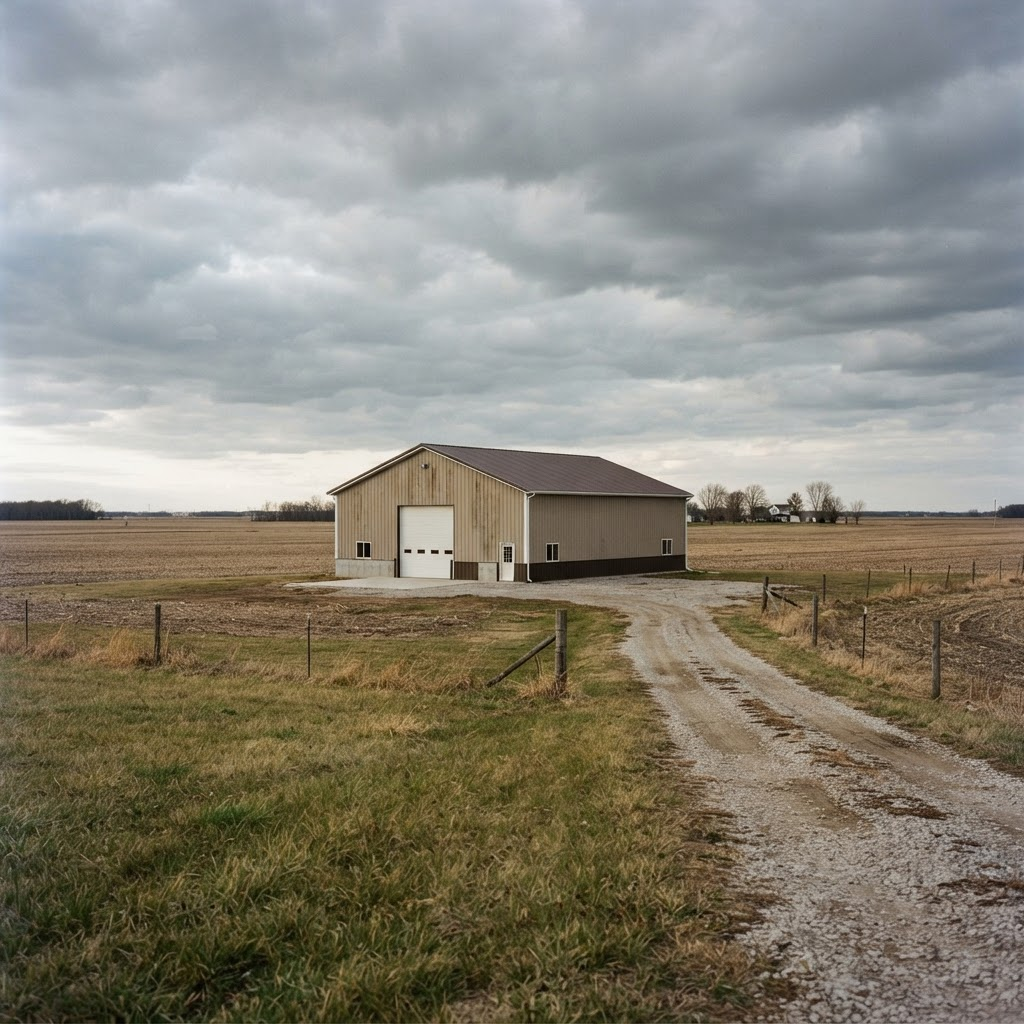
A pole barn is a post frame building. Instead of resting on a continuous poured foundation with studs every sixteen inches, the whole structure hangs on a grid of heavy columns set six to ten feet apart, usually on concrete footings below the frost line. Horizontal girts and purlins tie the columns together and carry the steel siding and roofing. Because the columns do the work, you need far less foundation and far less framing lumber than a stick built structure of the same size, and you get long clear spans with no interior posts in the way. That is the whole reason the method dominates farm and shop construction in this part of Indiana: a 40 by 60 post frame shop can go up for roughly half of what the same building would cost stick built on a full foundation, and it goes up in weeks rather than months.
Sizes cluster into a few familiar shapes. A two car garage or hobby shop is usually 24 by 32 or 30 by 40. A general purpose farm shop runs 40 by 60 or 40 by 80. Machinery and equipment storage tends to be 40 by 80 up to 60 by 120, and the number that actually matters there is not the footprint but the sidewall height and the door opening, because a combine with the head on will not fit through a fourteen foot door. Broadly, in eastern Indiana in recent seasons, a bare shell with steel siding, a steel roof, one walk door, and no concrete has run somewhere in the range of eighteen to thirty dollars per square foot depending on sidewall height and door count. Add a concrete floor and you are typically looking at another seven to twelve dollars per square foot. Insulation, steel liner panels, and overhead doors move the number further. Those are ranges for orienting yourself, not quotes. Steel pricing moves, and every builder on this page will tell you the same thing: the site changes the number more than the catalog does.
Before you call anyone, there are decisions only you can make. Sidewall height, because that governs what fits inside and cannot be changed later. Roof style, where a straight gable is the standard and cheapest, a gambrel buys you loft space, and a monitor roof raises a center section for light and ventilation in a horse or livestock barn. Roofing material, where screw down ribbed panel is the normal choice for an equipment building and standing seam costs more but has no exposed fasteners to back out and leak, which is why it belongs on a house or a barn that faces the road. Doors, which is where budgets quietly break: sliding doors are the least expensive and fine for a machine shed, overhead doors are what you want on a heated shop, and hydraulic or bifold doors are wonderful and expensive. Then insulation and interior finish, which you can defer, though running conduit and blocking before the liner goes on is far cheaper than opening a wall back up.
Concrete is usually not included in a post frame quote, and this is the single most common misunderstanding. Most shops on this page will grade the building pad and pour the column footings as part of the job, then hand the floor to a concrete crew, either their own or one they have worked with for years. Ask plainly what is in the number and what is not. The same goes for permits: unincorporated agricultural buildings in these counties often need only a simple building permit, but anything with plumbing, a residence, or a commercial use gets more involved, and county rules vary enough that it is worth asking who is pulling the permit and who pays for it. Electrical and plumbing are almost never included; expect a rough in at best.
On timing, plan further out than you want to. Most shops in this region book eight to fourteen weeks from a signed quote to the first day on site, and the good ones fill their season by March. Spring is the worst time to start calling and the most common time people do. A crew can generally get a shell up in one to three weeks once they are on your ground, weather permitting, but the wait is in the queue and in the material order, not the build. If you want a building finished before the ground freezes, call in winter. If you call in June expecting an August build, you will be told no by everyone worth hiring.
What to Ask Before You Call
Have these answers ready and the first phone call will get you a number instead of a callback.
- What are you going to put in it
- Say it in plain terms: two tractors and a wagon, a woodshop, four horses, a car and a lawnmower. A builder sizes the doors and the sidewall around the tallest and widest thing that has to get through and turn around inside.
- How big, and how tall on the sidewall
- Have a footprint in mind even if it changes, and a sidewall height. Twelve feet is common, fourteen if equipment comes in, sixteen for a hoist or a tall loader. Footprint can be trimmed later. Sidewall height cannot.
- Where exactly is it going, and what is the ground like
- Know whether the spot is level, whether it holds water after a rain, how a loaded truck and trailer will get in, and roughly where your setback lines and any septic field or buried line run.
- Do you want a concrete floor
- Decide up front, because it changes the pad work and often the schedule. If yes, ask whether the builder pours it or subs it out, and whether the quote includes the floor or only the footings.
- When do you need it standing
- A real date, and how much of it is firm. Being honest that you can wait until fall will often get you a better price and a better crew than pushing for spring.
- What is the number you cannot go past
- Give a range rather than nothing. A builder who knows you have forty five thousand to spend will tell you what forty five thousand buys, instead of quoting a building you were never going to sign for.
Pole Barn Builders in Wells County
1 shop listed
- (765) 555-0100, call Lengacher Post Frame
Lengacher Post Frame
Pole Barns & Post Frame · Bluffton, IN
Dairy barns, free stall additions, and heifer housing.
19 more pole barn builders are listed in the surrounding counties, and most of them will travel into Wells County for the right job. See all 20 shops in eastern indiana.